The Key to Development: Own the Process, Appreciate the Effort
“How are my child’s lessons going?” is a question that probably lingers somewhere in all of our minds. Sometimes while we wait beside them during homework, sometimes when we receive exam results… Our children’s academic journey can be a process filled with excitement, curiosity, and sometimes even a little too much worry for us as well. However, making mistakes or struggling during homework is a natural part of the process.
At this exact point, parental attitude often directly shapes the child’s perspective on learning. For example, noticing and appreciating the effort your child shows throughout the process supports the development of a growth mindset and, in the long run, actually provides much greater benefit. In fact, research also shows that children whose parents embrace the process and praise effort rather than success are able to cope with challenges more flexibly.
This approach takes homework out of the “do it” or “check it” mindset and transforms it into an experience in which the child takes ownership of their own learning journey through statements such as, “I saw how much effort you put into this homework/question, and that was really good.” When parents take on the role of a guide rather than being controlling or constantly reminding, the child learns to take responsibility, solve problems, and develop their own learning strategies. Moreover, owning the process supports not only academic achievement but also the child’s self-confidence and motivation.
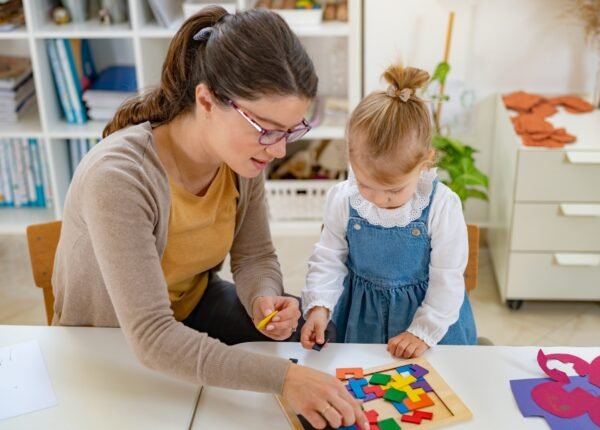
The essence of the matter is this: when you are by your child’s side during homework and learning processes, appreciating their efforts and focusing on the process itself makes the greatest contribution to both their academic and personal development in the long term. In other words, walk alongside your child on their journey; beyond grades, celebrate growth itself.
REFERENCES
Dweck, C. S. (2006). Mindset: The New Psychology of Success. New York: Random House.
Henderikx, M., Kreijns, K., & Kalz, M. (2017). Refining success and dropout in massive open online courses based on the intention–behavior gap. Distance Education, 38(3), 353–368. https://doi.org/10.1080/01587919.2017.1369006
Mueller, C. M., & Dweck, C. S. (1998). Praise for intelligence can undermine children’s motivation and performance. Journal of Personality and Social Psychology, 75(1), 33–52. https://doi.org/10.1037/0022-3514.75.1.33
Pomerantz, E. M., & Kempner, S. G. (2013). Mothers’ daily person and process praise: Implications for children’s theory of intelligence and motivation. Developmental Psychology, 49(11), 2040–2046. https://doi.org/10.1037/a0031840
Sisk, V. F., Burgoyne, A. P., Sun, J., Butler, J. L., & Macnamara, B. N. (2018). To what extent and under which circumstances are growth mind‐sets important to academic achievement? Two meta‐analyses. Psychological Science, 29(4), 549–571. https://doi.org/10.1177/0956797617739704